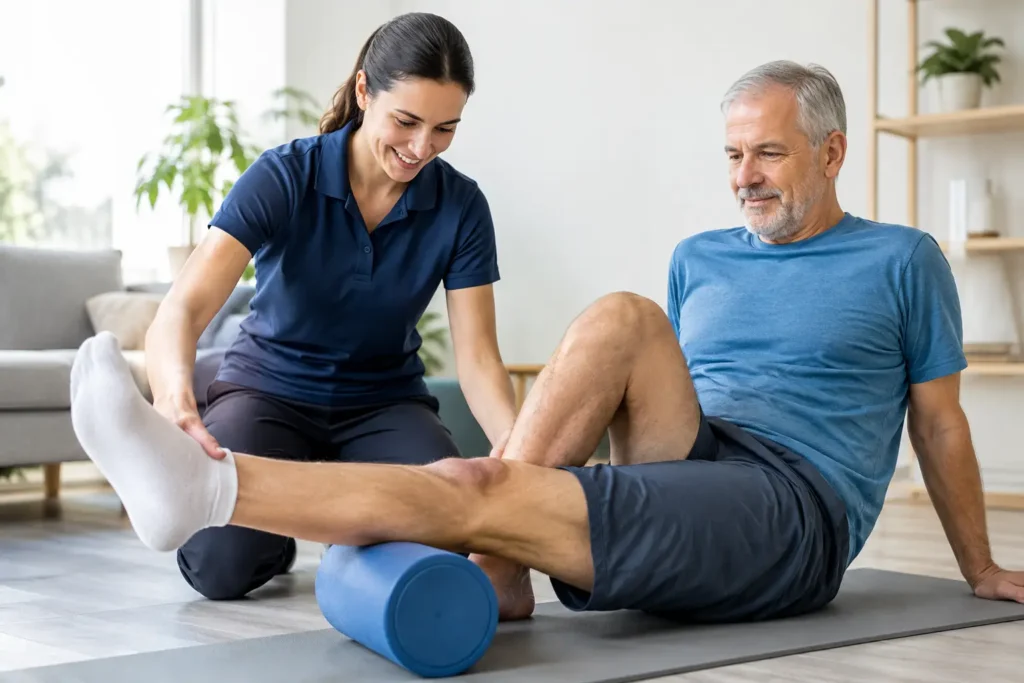
The first few weeks after surgery can make ordinary tasks feel unexpectedly demanding. Getting out of bed, using the bathroom, climbing a step, reaching into a cupboard, or sleeping comfortably may require more effort than expected. Home physiotherapy after surgery brings guided rehabilitation into the place where those real-life movements happen, helping you rebuild function safely and steadily.
For many people, the goal is not simply to reduce pain. It is to walk with confidence, manage stairs, return to work, care for family, drive safely, or resume exercise without fear of causing harm. A structured plan can turn those goals into practical next steps.
Why the Early Recovery Phase Needs Guidance
Surgery may repair or replace a joint, stabilize a fracture, restore a tendon, or address a painful condition. Yet the procedure is only one part of recovery. After surgery, swelling, pain, reduced movement, muscle weakness, stiffness, and understandable caution can change how you move.
Without guidance, people often fall into one of two patterns: doing too little because movement feels worrying, or doing too much too quickly because they want to feel normal again. Neither approach supports the best recovery. Too little activity can contribute to stiffness, weakness, reduced circulation, and loss of confidence. Too much strain can irritate healing tissues and delay progress.
A physiotherapist helps find the middle ground. Your plan should respect your surgeon’s instructions, the type of procedure you had, your current symptoms, and the demands of your home and daily routine. A knee replacement recovery will not follow the same path as shoulder surgery, spinal surgery, or repair after a fracture.
What Home Physiotherapy After Surgery Can Address
Home-based rehabilitation is especially useful when travel to a clinic is difficult, painful, or not yet advisable. It also gives the physiotherapist a clear view of the movements and barriers that matter most: the height of your bed, the layout of your bathroom, the stairs you use, and the chair where you spend much of the day.
Safe movement from the start
Early sessions may focus on fundamental tasks that are easy to overlook until they become difficult. This can include learning safer ways to get in and out of bed, stand from a chair, use a walker or cane, manage stairs, and move around the home while protecting the surgical area.
For a person recovering from hip or knee surgery, gait retraining may be a major priority. After shoulder surgery, the focus may be on supported positioning, gentle approved movement, and avoiding movements that place unwanted stress on the repair. Following back surgery, walking tolerance, posture, and safe ways to change position may come first.
Swelling, stiffness, and pain management
Pain after surgery is expected, but it should be monitored rather than ignored. A physiotherapist can guide appropriate positioning, gentle mobility work, pacing, and the use of prescribed exercises to help reduce stiffness and improve circulation. They can also help you understand the difference between normal post-exercise soreness and pain that suggests you need to stop and seek advice.
Progress does not always feel linear. Some days will be better than others, particularly when sleep has been poor or activity has increased. The aim is a steady upward trend, not a perfect recovery every day.
Strength, balance, and confidence
Muscles can weaken quickly during reduced activity, immobilization, or time in bed. Regaining strength is not only about lifting heavier weights. It is about having enough control to stand from a low chair, walk without limping, carry a light bag, reach overhead, or recover your balance if you stumble.
Your program should progress from simple, controlled movements to more demanding functional tasks. Balance work may be included for older adults, people returning to walking after a fracture, or anyone who feels unsteady after surgery. The right level of challenge matters. An exercise should feel purposeful, not frightening.
A Functional Assessment Makes the Plan Personal
A home visit should begin with assessment, not a generic exercise sheet. Your physiotherapist will consider your surgery and medical instructions, current pain and swelling, range of motion, strength, walking pattern, balance, home setup, and personal goals.
The most useful questions are often practical ones: Can you get to the bathroom safely at night? Can you prepare a meal? Are you able to sit comfortably for work? Can you climb the stairs to your bedroom? What movement are you avoiding because you do not trust your body yet?
At PhysioRebound, rehabilitation is centered on these functional outcomes. The plan is built to restore what you need to do, step by step, rather than treating exercises as an end in themselves.
What a Recovery Plan May Look Like
The pace of recovery depends on the procedure, your health history, the condition of the tissue before surgery, and how consistently you can follow the program. Your surgeon’s restrictions always come first. Still, many post-surgical programs follow a similar progression.
Protect and restore early movement
In the first stage, the focus is protecting healing tissues while preventing unnecessary loss of movement and strength. You may work on breathing, circulation exercises, gentle muscle activation, supported range of motion, and short, frequent walks if permitted.
This phase is often less dramatic than people expect. Small actions done correctly and consistently can make a meaningful difference. A few well-paced walks around the home may be more useful than one exhausting effort that leaves you sore for two days.
Build control before intensity
As pain, swelling, and movement improve, exercises can become more active. The emphasis shifts toward control: moving the joint with better alignment, activating the correct muscles, and reducing compensations such as limping, shoulder hiking, or relying heavily on the stronger side.
This is the point where people may feel tempted to rush. Feeling better is encouraging, but healing tissue still needs time. Your physiotherapist can progress the program when your movement quality and symptoms show that you are ready.
Return to the demands of life
Later rehabilitation should prepare you for the tasks that matter to you. That may mean longer walks, stairs, household lifting, desk tolerance, getting in and out of a car, returning to a physical job, or sport-specific drills. A person who wants to return to badminton, for example, needs more than basic pain-free walking. They need strength, balance, reaction, and confidence for the movements the sport requires.
For some patients, aqua therapy can be a helpful complement once the surgical wound has fully healed and medical clearance has been given. Water can reduce load through buoyancy while allowing supported movement and strengthening. It is not suitable for every stage or every procedure, but it can be a useful bridge between early rehabilitation and more demanding land-based activity.
How to Get More From Your Home Sessions
Home physiotherapy works best when the program fits your actual routine. Be open about pain, worries, and practical constraints. If an exercise is unrealistic because of your space, schedule, or confidence level, your physiotherapist can adapt it.
Consistency matters more than doing everything perfectly. Set aside the recommended time for your exercises, but also use movement opportunities throughout the day. Practice standing with good control when leaving your chair. Use the walking strategy you have been taught when moving through the home. Take planned rest breaks rather than pushing until pain forces you to stop.
Keep track of questions between sessions. A note about when swelling increases, which movement feels difficult, or how far you walked can help guide the next progression. Family members may also benefit from learning how to assist without pulling, rushing, or taking over tasks you are ready to practice independently.
When to Contact Your Surgeon or Medical Team
Physiotherapy should feel guided and safe, but some symptoms need prompt medical attention. Contact your surgeon or appropriate medical service if you develop increasing redness, warmth, drainage, or opening around the wound; fever or chills; sudden severe or worsening pain; unusual swelling in the calf; chest pain; shortness of breath; or new numbness, weakness, or loss of bladder or bowel control.
Do not try to exercise through symptoms that feel significantly different from your expected recovery. Asking early is always better than waiting and worrying.
Recovery after surgery is not a race back to your old routine. It is a process of restoring trust in your body through the right movement, at the right stage, with goals that make sense for your life. Each safer step, easier transfer, stronger lift, and more confident walk is evidence that you are moving forward.