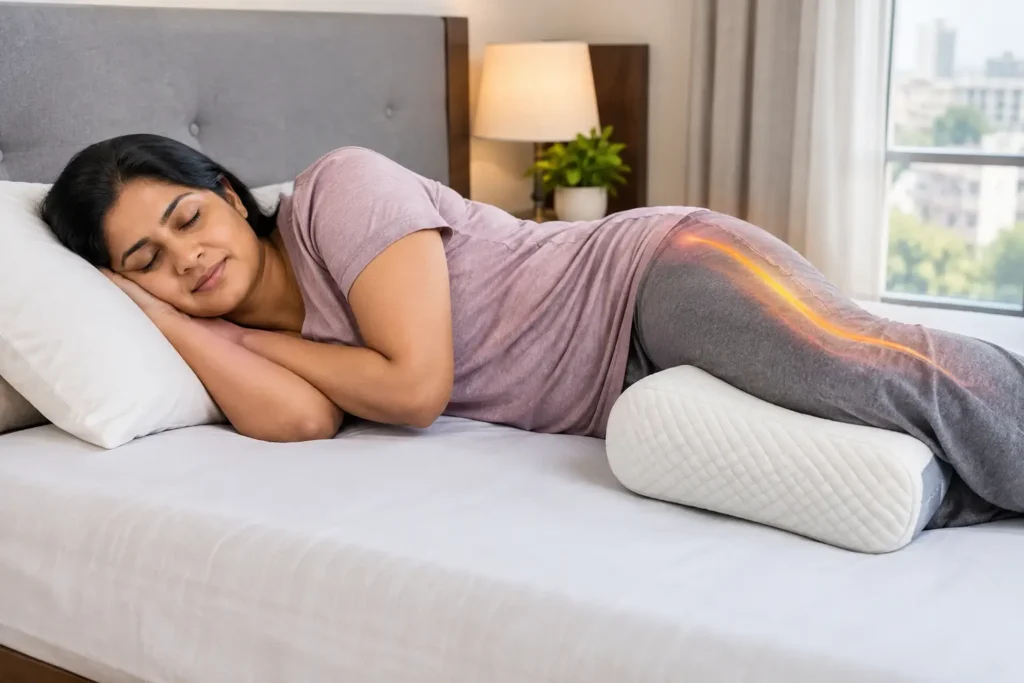
A sharp ache down the leg can make bedtime feel less like rest and more like a problem to solve. Learning how to sleep with sciatica is not about finding one perfect position for everyone. It is about reducing strain on the irritated nerve, supporting your spine and hips, and giving your body the conditions it needs to settle overnight.
Sciatica can cause pain, tingling, burning, numbness, or weakness that travels from the low back or buttock into one leg. Symptoms often feel worse at night because you are still for longer, your usual distractions are gone, and an unsupported sleeping position may place pressure on sensitive tissues. Small, practical changes can make a meaningful difference.
Start with the position your body tolerates best
The best sleeping position for sciatica depends on what is driving your symptoms. A disc-related irritation may respond differently from pain connected to spinal narrowing, hip stiffness, muscle tension, or a recent injury. Pay attention to what happens to your leg symptoms, not only your back pain, when you change position.
Side sleeping with a pillow between the knees
For many people, side sleeping is the most comfortable place to begin. Lie on the less painful side if that feels easier, bend your knees slightly, and place a firm pillow between them. The pillow should be thick enough to keep your top hip from dropping forward or down toward the mattress.
This setup helps keep the pelvis and low back more level. If there is a gap between your waist and the mattress, a small rolled towel or thin cushion may provide gentle support. Avoid curling tightly into a ball, which can leave the hips and low back stiff by morning.
If one side consistently increases pain, numbness, or tingling down the leg, do not force it. Switch sides or try a different position instead.
Back sleeping with support under the knees
Sleeping on your back can reduce pressure on the low back when the knees are supported. Place one or two pillows under both knees, or use a wedge pillow if you have one. This gently bends the hips and knees, often allowing the lower back muscles to relax.
Some people also feel better with a small towel under the natural curve of the low back. Keep it subtle. Too much lift can increase discomfort rather than relieve it. Your goal is supported neutral, not a dramatic arch.
Back sleeping in a slightly reclined position
A reclined position may help if lying fully flat makes leg pain worse. This can be created with an adjustable bed, a supportive recliner, or carefully arranged pillows behind the upper back and beneath the knees. It can be especially useful for people whose symptoms worsen when the spine is fully straightened.
Use this as a temporary comfort strategy, not a reason to stay in one position all night if it leaves you stiff. Change positions slowly and notice whether your symptoms are calmer by morning.
Stomach sleeping is usually less forgiving
Stomach sleeping often rotates the neck and increases the arch in the low back. For someone with sciatica, that can be irritating. If it is the only way you can fall asleep, place a thin pillow under the lower abdomen and pelvis and use a very flat pillow under your head, or none if your neck tolerates it.
Still, if you wake with increased back pain or more symptoms down the leg, work gradually toward side or back sleeping with better support.
Set up your bed for less strain
Your mattress does not have to be extremely firm to be supportive. What matters is whether it holds your spine in a reasonably aligned position without allowing your hips or shoulders to sink too deeply. A mattress that is sagging, uneven, or much too soft can make it harder to find a settled position.
Before replacing a mattress, try simpler adjustments. A pillow between the knees, under the knees, or behind the back can change how your body is supported. If you side sleep, hugging a pillow can prevent the top shoulder and trunk from rolling forward. If you tend to roll onto a painful side, place a pillow behind your back as a gentle barrier.
Getting into bed matters too. Rather than twisting down into the mattress, sit on the edge of the bed first, lower yourself onto your side using your arms, then bring your legs up together. To get out of bed, reverse the process: roll to your side, bring your legs over the edge, and push up with your arms. This log-roll approach reduces sudden twisting through the low back.
Build a calmer hour before bed
Night pain is rarely solved by pillows alone. Your evening routine can either prepare the body for rest or keep an irritated area sensitive and stiff.
Gentle movement is usually more helpful than becoming completely still. A short, easy walk around the home, a few comfortable pelvic movements, or prescribed mobility exercises can reduce the stiffness that builds after sitting. The key word is comfortable. Do not stretch aggressively into leg pain, and do not treat a flare-up as something you need to push through.
Heat can soothe tight muscles around the low back, buttock, or hip for some people. Use a warm pack for a limited period before bed and protect your skin from direct heat. Others find a cool pack more calming after a busy day. Choose the option that eases your symptoms rather than following a rule.
Try to avoid long periods on a soft couch, particularly if you sink into a slouched position. Also be cautious with late-evening heavy lifting, repeated bending, and intense workouts that reliably increase leg symptoms. Recovery does not mean avoiding all activity. It means pacing activity so your body can rebuild capacity without repeatedly provoking pain.
What to do when sciatica wakes you up
When pain wakes you, resist the urge to stay rigid in the same position. Move slowly. Roll onto your side, use your arms to sit up, and stand for a minute if walking briefly helps. Then return to bed with your pillows set up before you lie down again.
A few slow breaths can be useful, especially when pain has made your whole body tense. Breathe into the lower ribs and abdomen, allowing the jaw, shoulders, and buttocks to soften. This will not remove the source of sciatica, but it may reduce the protective muscle tightening that makes the episode feel more intense.
If your symptoms are regularly disrupting sleep, keep a simple note for several nights. Record your starting position, what woke you, how long symptoms lasted, and what helped. Patterns from this record can guide a physiotherapy assessment and make treatment more specific.
When sleep pain needs prompt medical attention
Most sciatica improves with the right assessment, gradual movement, and a tailored rehabilitation plan. But certain symptoms need urgent medical care rather than another change of pillow or position. Seek prompt evaluation if you notice:
- New loss of bladder or bowel control
- Numbness around the groin, genitals, or inner thighs
- Severe or rapidly worsening leg weakness, such as the foot giving way
- Pain after a significant fall, accident, or unexplained severe illness
You should also arrange a clinical assessment for sciatica that is persistent, worsening, or repeatedly preventing sleep. Pain medication may reduce symptoms temporarily, but it does not identify why the nerve is irritated or address the movement, strength, and loading issues that may be contributing.
Use sleep as part of your recovery plan
The aim is not simply to get through the night. Better sleep supports pain tolerance, healing, concentration, mood, and confidence with movement the next day. A physiotherapist can assess how your back, hips, legs, walking pattern, and daily activities are interacting, then help you build a plan that fits your actual life.
At PhysioRebound, rehabilitation is tied to practical goals: sleeping more comfortably, walking without fear, returning to work, and moving with confidence again. Your best sleep position may change as symptoms settle and your strength improves. Treat each more comfortable night as useful feedback that your body is finding its way back to recovery.