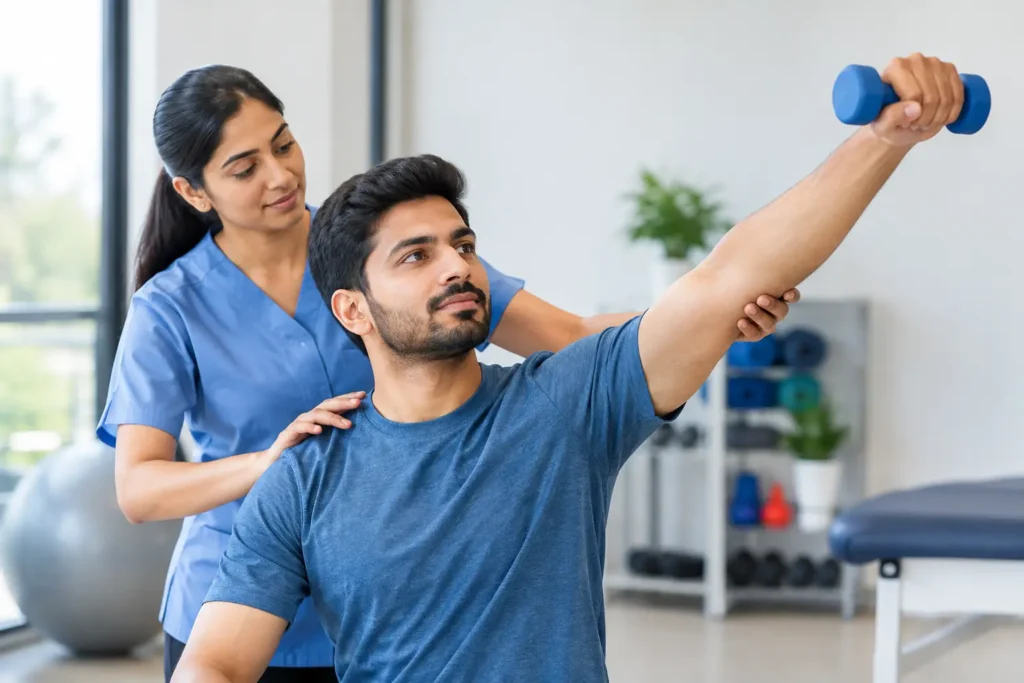
Reaching into a high cabinet, fastening a seat belt, putting on a shirt, or sleeping on one side can become surprisingly difficult when the shoulder hurts. Rotator cuff rehabilitation is not simply about making pain disappear. It is a structured process to restore the strength, control, and confidence you need to use your arm in real life.
For some people, shoulder pain starts after a fall, a gym injury, or repetitive overhead work. For others, it builds gradually after long hours at a desk, reduced activity, or age-related tendon changes. Whether you are recovering from a strain, a tear, surgery, or persistent shoulder pain, the right plan begins with understanding what your shoulder can do now and what you need it to do next.
Why the rotator cuff affects so much of daily life
The rotator cuff is a group of four muscles and tendons that help center the upper arm bone in the shoulder joint. They work with the shoulder blade and larger arm muscles to create steady, controlled movement. When this system is irritated, weak, injured, or recovering after surgery, even ordinary tasks can feel limited.
Pain is often felt at the outer upper arm or deep in the shoulder. You may notice weakness when lifting, pain at night, stiffness when reaching behind your back, or a painful catch during certain movements. These symptoms can overlap with frozen shoulder, neck-related pain, arthritis, or other shoulder conditions. That is why an assessment matters more than choosing exercises from a video.
A physiotherapist looks beyond the painful movement. They assess range of motion, shoulder blade control, muscle strength, posture, neck movement, work demands, sleep positions, and the tasks that matter to you. The goal is to identify what is driving the limitation and build a plan that fits your stage of recovery.
Rotator cuff rehabilitation starts with the right load
A painful shoulder is not always a shoulder that needs complete rest. At the same time, pushing through sharp pain or returning too quickly to heavy lifting can keep the tendon irritated. Rehabilitation works by finding an appropriate amount of movement and load, then progressing it gradually.
Early treatment may focus on settling symptoms and maintaining comfortable movement. This can include education about activity modification, gentle mobility work, hands-on treatment where appropriate, and changes to how you sleep, sit, lift, or reach. If lifting the arm overhead is painful, the first goal may be to regain a smoother, more comfortable path rather than force a full range immediately.
As pain becomes more manageable, the focus shifts to rebuilding capacity. This is where targeted strengthening matters. The rotator cuff needs to work with the muscles around the shoulder blade, chest, upper back, and trunk. A shoulder that is strong in one isolated exercise but poorly controlled during a real lift is not yet ready for every demand.
A function-first recovery pathway
At PhysioRebound, rehabilitation is tied to the activities that make a difference in your day. Your progression may not look exactly like someone else’s because a parent lifting a child, an office worker carrying a laptop bag, and a recreational tennis player place different demands on the shoulder.
1. Settle pain without becoming inactive
The first stage is about creating enough comfort to move with confidence. You may need temporary changes to aggravating tasks, such as avoiding repeated overhead reaching or carrying heavy items away from the body. This does not mean avoiding all shoulder use. Gentle, guided movement can help prevent unnecessary stiffness and fear of movement.
Sleep deserves attention here. A pillow supporting the arm in front of the body or under the elbow may reduce strain for some people. Others feel better avoiding direct pressure on the painful shoulder. Small adjustments can make the night more manageable while recovery is underway.
2. Restore comfortable mobility
Stiffness can develop after injury, surgery, immobilization, or simply from guarding the painful shoulder. Mobility work is selected based on what is limited. Some people need more overhead reach; others need to regain the ability to reach behind the back or across the body.
The key is dosage. Stretching aggressively into high pain is rarely helpful. Controlled repetitions, supported movements, and gradual range improvements are usually more productive. After surgery, the surgeon’s protocol and tissue-healing timelines guide this phase closely.
3. Rebuild shoulder and shoulder blade strength
Strengthening is where rotator cuff rehabilitation becomes more than a collection of band exercises. The program may begin with low-load isometric holds or supported rotations, then progress to resistance work that challenges the cuff, shoulder blade stabilizers, and larger pulling and pushing muscles.
Exercise selection depends on your symptoms and goal. A person returning to desk work may need endurance for posture and repeated reaching. Someone returning to manual work may need stronger lifting, carrying, and controlled lowering. An athlete may need speed, overhead control, and sport-specific loading.
Mild muscular effort during exercise can be appropriate. Sharp pain, rapidly worsening pain, or soreness that significantly disrupts the next day may mean the load needs adjustment. Progress comes from consistent, tolerable work, not from one difficult session.
4. Retrain real movements
This stage connects clinic exercises to life outside the clinic. You may practice reaching to shelves, lifting a bag, pushing open a heavy door, placing objects overhead, or building tolerance for work tasks. If your goal is sport, rehabilitation gradually adds the positions, speed, and endurance your sport requires.
This is also where confidence returns. Many people avoid using the arm for weeks because they expect pain or reinjury. Carefully graded exposure shows the shoulder that it can handle more again. The progression should be challenging enough to create change but sensible enough to protect healing tissue.
5. Return with a plan for staying active
A successful result is not only a pain score. It is being able to sleep more comfortably, dress independently, work without constant guarding, exercise with control, and trust your arm again. Before discharge, it helps to have a realistic maintenance plan for strength, mobility, and any higher-demand activities you want to resume.
For some patients, water-based rehabilitation can be a useful bridge. Aqua therapy reduces the effect of body weight and can make early movement feel less threatening, particularly when land exercises are difficult or painful. It is a clinical tool, not a replacement for progressive land-based strengthening when the shoulder is ready for it.
When recovery may need a closer look
Many rotator cuff problems improve with well-guided conservative care, but not every shoulder follows the same path. A complete traumatic tear, significant loss of strength after an injury, or post-surgical recovery may require more specific medical coordination. Your physiotherapist can help you understand when imaging, an orthopedic review, or a modified rehabilitation timeline is appropriate.
Seek prompt medical assessment after a major fall or injury if you cannot lift the arm, the shoulder looks deformed, there is sudden severe swelling, numbness or tingling that persists, fever, or unexplained severe pain. These symptoms need evaluation rather than self-treatment.
It is also worth reassessing a shoulder that has stopped progressing. Sometimes the issue is not lack of effort but an exercise program that is too aggressive, too easy, poorly matched to the condition, or missing a contributing factor such as neck pain, stiffness, or poor lifting mechanics.
What makes rehabilitation effective
There is no single best exercise for every rotator cuff problem. A useful program is specific, progressive, and connected to your life. It accounts for whether you are recovering from surgery, managing a recent injury, dealing with long-standing pain, or preparing to return to demanding work or sport.
Consistency matters, but so does flexibility. Some weeks you may progress resistance; other weeks, workload, sleep, travel, or a symptom flare may call for a temporary adjustment. That is not failure. It is part of a thoughtful recovery process.
Your shoulder does not need to become perfect before you begin trusting it again. With clear guidance, the right progression, and attention to the movements that matter most, each comfortable reach can become evidence that you are rebuilding more than strength – you are rebuilding your way back to daily life.