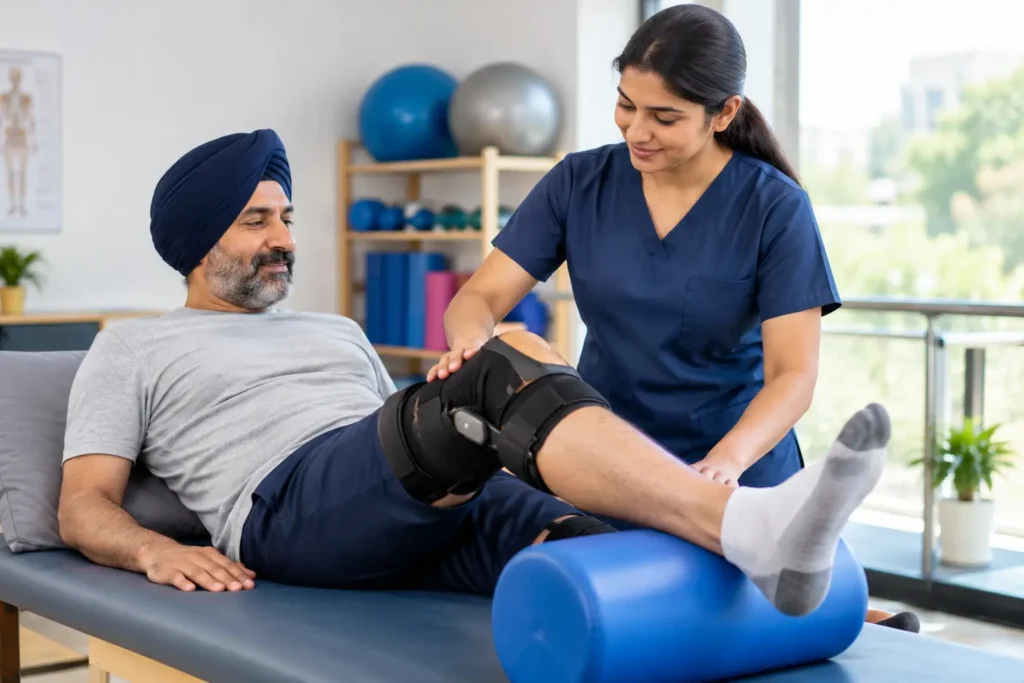
The first few weeks after orthopedic surgery can feel unexpectedly demanding. A repaired joint or bone may be healing well, yet getting out of bed, using stairs, dressing, sleeping comfortably, or trusting a leg to carry your weight can still feel difficult. Postoperative orthopedic rehabilitation is the structured process that helps bridge that gap between surgery and real life.
Pain relief matters, but recovery is about more than pain relief. It is about restoring the movement, strength, balance, and confidence you need to return to your routine safely. Whether you are recovering from a knee replacement, shoulder repair, fracture fixation, ligament surgery, or spinal procedure, the right plan should reflect both your surgical instructions and what you need your body to do each day.
Why Rehabilitation After Orthopedic Surgery Matters
Surgery addresses a structural problem. Rehabilitation helps your body adapt to the repair. After a procedure, swelling, stiffness, pain, weakness, altered walking patterns, and fear of movement are common. If these issues are not addressed progressively, they can affect how you move long after the surgical wound has healed.
For example, someone may protect a painful knee by shifting weight to the other side. A person recovering from shoulder surgery may keep the arm still for so long that stiffness becomes a larger obstacle than pain. Following a fracture, muscles can lose strength quickly during immobilization, making normal walking or reaching harder even when the bone is healing properly.
A physiotherapist looks beyond the operated area. Your plan may need to address posture, circulation, core control, balance, gait, neighboring joints, and the practical demands of home or work. Recovery is rarely one exercise repeated indefinitely. It is a progression guided by how you are healing and functioning.
What Postoperative Orthopedic Rehabilitation Should Help You Do
A good rehabilitation plan starts with meaningful goals, not a generic exercise sheet. Your goals may be walking around your home without feeling unsteady, getting in and out of a car, lifting your child, returning to a desk job without neck or back strain, or preparing to resume sport.
Early goals are often simple but significant: managing swelling, protecting the surgical repair, improving comfortable movement, and becoming more independent with transfers and walking. As healing progresses, the focus shifts toward strength, mobility, coordination, endurance, and confidence in more demanding tasks.
The timeline depends on your surgery, the quality of tissue healing, your previous activity level, age, other health conditions, and any restrictions from your surgeon. There is no benefit in forcing a joint beyond its safe stage of recovery. At the same time, avoiding movement longer than necessary can contribute to stiffness and weakness. The right pace is deliberate, not rushed or passive.
A function-first recovery plan
At PhysioRebound, rehabilitation is tied to the activities that matter outside the clinic. A program for knee surgery may include rebuilding control for stairs, uneven ground, and safe walking. Shoulder rehabilitation may focus on reaching a shelf, dressing, sleeping, or returning to overhead work. After hip surgery, treatment may prioritize confident walking, transfers, and balance.
This approach helps make each stage of rehabilitation easier to understand. You are not simply doing exercises because they were prescribed. You are retraining the movements that support independence and a return to daily life.
The Five Stages of Recovery After Surgery
Recovery does not follow an identical calendar for everyone, but most postoperative plans move through recognizable stages.
1. Protect and settle
In the early stage, the priority is protecting the surgery while managing pain and swelling. Your physiotherapist reviews your surgeon’s precautions, wound status, weight-bearing instructions, brace or sling use, and current mobility. Gentle movement, positioning advice, breathing exercises, circulation work, and safe use of crutches or a walker may be appropriate.
This stage can be frustrating because progress may feel slow. However, learning how to move safely now can prevent avoidable setbacks later. It is also the time to clarify what is normal, what should improve gradually, and which symptoms require medical review.
2. Restore comfortable movement
Once it is appropriate, rehabilitation begins to restore range of motion without irritating healing tissues. This might involve guided joint movement, soft tissue techniques, carefully selected home exercises, and education about pacing activities.
The goal is not always to achieve maximum movement immediately. After certain repairs, moving too far too soon can be harmful. Your physiotherapist balances mobility work with the specific protection your surgery requires.
3. Rebuild strength and control
Muscle weakness after surgery is not only caused by inactivity. Pain and swelling can reduce how effectively muscles switch on, particularly around the knee, hip, and shoulder. Progressive strengthening helps restore joint support and movement quality.
Exercises may begin with controlled, low-load work and advance to resistance, standing tasks, step work, or functional lifting. Form matters. If the body compensates by twisting, hiking a shoulder, or shifting weight away from one leg, those patterns need to be retrained before load increases.
4. Retrain balance, walking, and daily tasks
Being strong on an exercise table is different from moving confidently through a busy day. This stage connects rehabilitation to real situations: walking at different speeds, turning, climbing stairs, getting up from the floor, carrying groceries, reaching, or tolerating longer periods at work.
For people recovering from lower-limb surgery, gait retraining is especially valuable. Limping may seem like a temporary habit, but it can place extra stress on the back, hip, or opposite knee. A physiotherapist can identify whether the issue is pain, reduced mobility, weakness, poor balance, or uncertainty about loading the leg.
5. Return to higher-level activity
The final stage prepares you for the demands you want to resume, whether that means gardening, long walks, manual work, running, or sports. Progression may include faster movements, direction changes, single-leg control, impact preparation, lifting, and job-specific tasks.
Return to sport or heavy activity should be based on more than the number of weeks since surgery. Strength, control, endurance, movement quality, confidence, and your surgeon’s guidance all matter. Some people need a gradual return with modified training before they are ready for full activity.
When Aqua Therapy Can Help
Water-based rehabilitation can be a useful complement to land-based physiotherapy, particularly when pain, stiffness, or reduced weight-bearing tolerance makes regular exercise difficult. The buoyancy of water reduces joint loading, which may allow you to practice walking, gentle strengthening, and mobility with greater comfort.
Aqua therapy is not casual pool exercise. It should be planned around your procedure, healing stage, incision status, and safety needs. It is usually introduced only when the wound is fully healed and your medical team has cleared water exposure. For some patients, it offers an encouraging way to begin moving more freely; for others, land-based work may be the better first choice.
How to Get More From Your Rehabilitation
Consistency usually matters more than doing too much on a good day. Complete your prescribed home program with attention to technique, and tell your physiotherapist if an exercise causes sharp pain, increased swelling, or symptoms that last well beyond the session. Mild effort and temporary muscle soreness can be expected as you rebuild, but your plan should be adjusted when your body is not responding as anticipated.
Keep follow-up appointments with your surgeon, especially if you have concerns about the incision, medication, or surgical restrictions. Contact your surgical team promptly for warning signs such as fever, increasing redness or drainage around the wound, sudden severe pain, calf pain or swelling, chest pain, shortness of breath, or a major change in function.
It also helps to prepare your environment for recovery. Clear trip hazards, place frequently used items within easy reach, use recommended mobility aids correctly, and ask for help with tasks that exceed your current restrictions. These practical details protect your progress while your strength and confidence catch up.
The goal after surgery is not to prove how quickly you can push through discomfort. It is to rebuild trust in your body, one safe movement at a time, until the things that once required planning begin to feel like your life again.