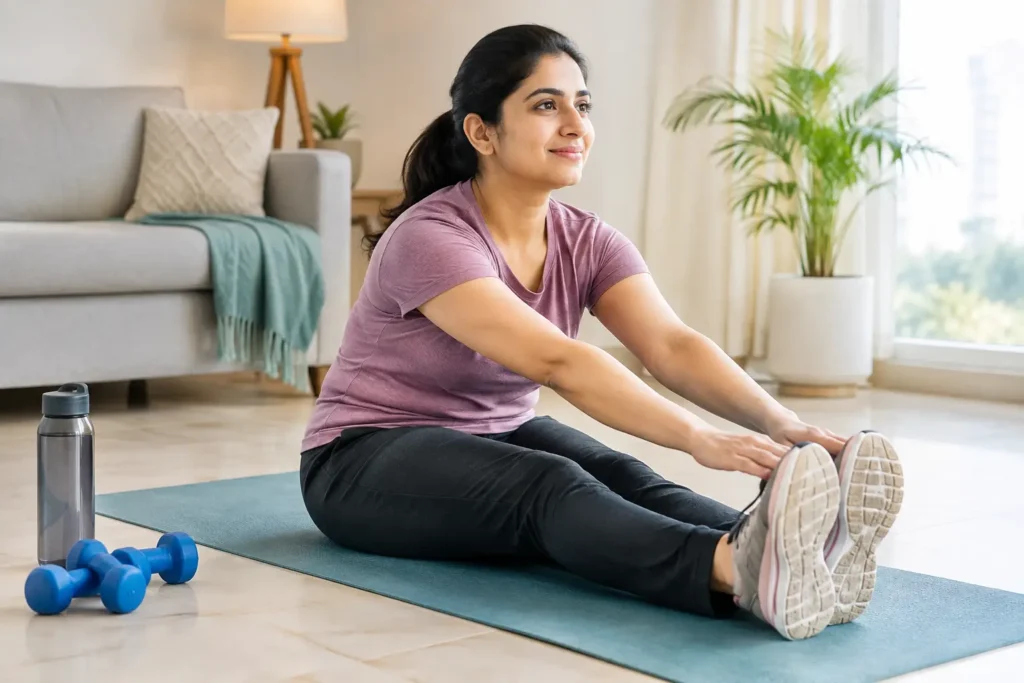
A few days in bed can leave your legs feeling unsteady. After a longer illness, surgery, injury, or hospital stay, standing up may feel surprisingly difficult, and a short walk to the bathroom can feel like a major task. To regain strength after bed rest, the answer is rarely to push through fatigue. It is to rebuild movement in the right order: safely, progressively, and around the daily activities that matter to you.
Bed rest affects more than muscle. It can reduce cardiovascular endurance, joint mobility, balance reactions, and confidence in your body. A thoughtful rehabilitation plan helps you restore these pieces together, so recovery supports real life: getting out of a chair, climbing stairs, carrying groceries, returning to work, or simply walking without fear of falling.
Why bed rest causes weakness so quickly
Muscles work on a use-it-or-lose-it principle. When you spend long periods lying down or sitting with very little movement, the muscles of the thighs, hips, calves, and trunk are used less. These are the muscles that help you stand, walk, turn, and stay balanced.
Reduced activity can also make joints feel stiff, particularly at the ankles, hips, knees, shoulders, and lower back. Your heart and lungs become less accustomed to activity as well. That is why you may feel breathless or tired after doing something that used to be easy.
The emotional side matters, too. After pain, surgery, a fracture, or a frightening illness, many people become cautious about moving. Some caution is sensible. But avoiding movement completely can allow weakness and fear to reinforce each other. Rehabilitation should respect the reason for the bed rest while giving your body clear, manageable opportunities to move again.
Start with a safety check, not an exercise challenge
Before beginning an exercise routine, consider why you were on bed rest and whether you have any restrictions from your physician or surgeon. This is especially important after joint replacement, spinal surgery, a fracture, a cardiac or respiratory illness, or a period of hospitalization.
Seek prompt medical advice if you have new chest pain, severe shortness of breath, fainting, a rapid or irregular heartbeat, new one-sided leg swelling, calf pain, fever, or worsening surgical wound symptoms. Do not treat these as ordinary signs of deconditioning.
A physiotherapy assessment is also valuable when walking feels unsafe, pain is limiting movement, you need an assistive device, or weakness is affecting basic independence. The right starting point depends on your balance, blood pressure response, joint protection needs, pain level, and the practical demands of your home and work.
How to regain strength after bed rest: build from the ground up
Recovery usually works best when it follows a gradual progression rather than a sudden return to a previous workout routine. Your body needs enough challenge to adapt, but enough recovery to avoid a flare-up of pain, swelling, dizziness, or exhaustion.
First, restore regular movement
Early movement may begin in bed or at the edge of the bed. Depending on your condition, this can include ankle pumps, gentle knee bends, heel slides, glute squeezes, and supported arm movements. These are not flashy exercises, but they help circulation, reduce stiffness, and reconnect you with basic muscle activation.
If getting upright is permitted, practice rolling, sitting up, and standing with safe support. Move slowly when changing positions, particularly if you have been lying down for several days. Lightheadedness can occur because the body needs time to adjust to being upright again.
Short, frequent activity is often more useful than one long session. For example, a few minutes of gentle movement several times a day may be better tolerated than a single session that leaves you wiped out for the next two days.
Rebuild the strength needed for daily tasks
Once you can tolerate basic movement, rehabilitation should focus on function. Sit-to-stands from a firm chair retrain the muscles used to rise from the toilet, chair, or bed. Supported heel raises help the calves contribute to walking. Standing weight shifts and mini-squats can improve lower-body control when performed with appropriate support.
The exact exercise selection depends on your needs. Someone recovering from a shoulder surgery may need to prioritize safe reaching and dressing. Someone recovering from a leg fracture may need to follow specific weight-bearing instructions. An office professional recovering after illness may need to rebuild posture, trunk strength, and tolerance for sitting and standing through the workday.
Quality matters more than quantity at first. A controlled sit-to-stand with steady knee alignment is more useful than rushing through repetitions with pain or poor balance. Your physiotherapist can progress resistance, range of motion, and repetitions as your control improves.
Retrain walking and balance
Walking is a full-body activity. It requires leg strength, ankle movement, posture, coordination, endurance, and the ability to respond if the surface is uneven or you need to turn quickly.
Begin with the distance you can manage safely. This might be a few trips across a room, a walk to the kitchen, or a short, supported walk outdoors. Build gradually, paying attention to how your body feels during the activity and later that day.
Balance training should match your current ability. It may start with standing at a counter, shifting weight from side to side, or practicing controlled turns. As confidence and safety improve, rehabilitation can include stepping patterns, obstacle practice, stair training, and more challenging balance tasks. If you use a cane or walker, a clinician can check that it is the right height and that you are using it effectively.
Add endurance without overdoing it
Feeling tired is expected after bed rest, but severe fatigue is a signal to adjust the pace. Use a simple effort scale: during activity, you should usually be able to speak in short sentences without gasping. If you are excessively breathless, dizzy, or unable to recover with rest, stop and seek medical guidance.
Endurance can be rebuilt through gradual walking, stationary cycling when appropriate, or supervised pool-based exercise. Aqua therapy can be particularly helpful for people with joint pain, post-surgical stiffness, or reduced confidence on land. Water buoyancy reduces impact while giving the muscles gentle resistance, making it possible to practice walking, balance, and strengthening with less stress on painful joints.
The trade-off is that pool exercise is not right for every stage of recovery. Open wounds, certain infections, uncontrolled medical conditions, or specific surgical precautions may mean waiting before entering the water. Clinical guidance helps determine whether it is a suitable option.
Use recovery signals to guide your progression
Mild muscle fatigue and temporary soreness can be normal when you begin moving more. Sharp pain, increasing joint swelling, a limp that worsens, or fatigue that stops you from managing the rest of your day suggests the activity level may be too high.
A useful rule is to assess your response over the next 24 hours. If symptoms settle and you can continue your usual basic activities, the amount was likely manageable. If pain, swelling, or exhaustion is clearly worse the next day, reduce the intensity, duration, or number of repetitions before trying again.
Sleep, hydration, regular meals, and sufficient protein also support recovery. They do not replace rehabilitation, but they give the body the energy and building blocks needed to respond to it. If appetite, weight loss, or fatigue is a major concern after illness, discuss it with your medical team.
Make the home environment part of rehabilitation
The safest exercise plan can still be difficult if your surroundings create obstacles. Clear loose rugs and clutter from walking paths, use supportive footwear, and make sure commonly used items are within easy reach. Good lighting is especially helpful for nighttime bathroom trips.
It may also help to temporarily break demanding tasks into smaller parts. Rather than standing to prepare a full meal, sit for chopping and take rest breaks. Rather than carrying a heavy laundry basket, make smaller trips. These adjustments are not signs of failure. They conserve energy while strength and confidence return.
For people who cannot easily travel after surgery or illness, selected in-home physiotherapy can allow assessment and training in the actual space where transfers, stairs, and daily routines happen. At PhysioRebound, rehabilitation is built around these practical goals, not simply around completing an exercise sheet.
Progress toward the life you want to return to
The final stage of recovery is not just doing more repetitions. It is preparing for the activities that make your life feel normal. That may mean getting through a workday without back pain, walking confidently in the community, lifting a child, returning to the gym, or managing stairs without holding your breath.
Set one or two meaningful goals and measure progress in practical ways. Notice whether you need fewer rest breaks, can stand longer while cooking, or feel steadier getting out of the car. These changes often show recovery before you feel fully back to your old self.
Strength returns through repeated, well-chosen movement. Start at the level your body can manage today, let safety guide the pace, and keep building toward the movements that give you independence and confidence again.